Women’s Wedding Suits: Trouser Suit or Skirt Suit?
Women’s wedding suits should feel intentional, celebratory and unmistakably personal. For a bride, groomswoman, bridesmaid or guest, the first decision is often whether the outfit should finish with tailored trousers or a skirt. Both can create a confident three-piece look; the better choice is the one that suits your proportions, movement and role in the day.
This is not a question of one option being more formal or more feminine. It is about choosing the silhouette in which you will feel composed from the ceremony to the final photograph.
Women’s wedding trouser suits: clean lines and easy movement
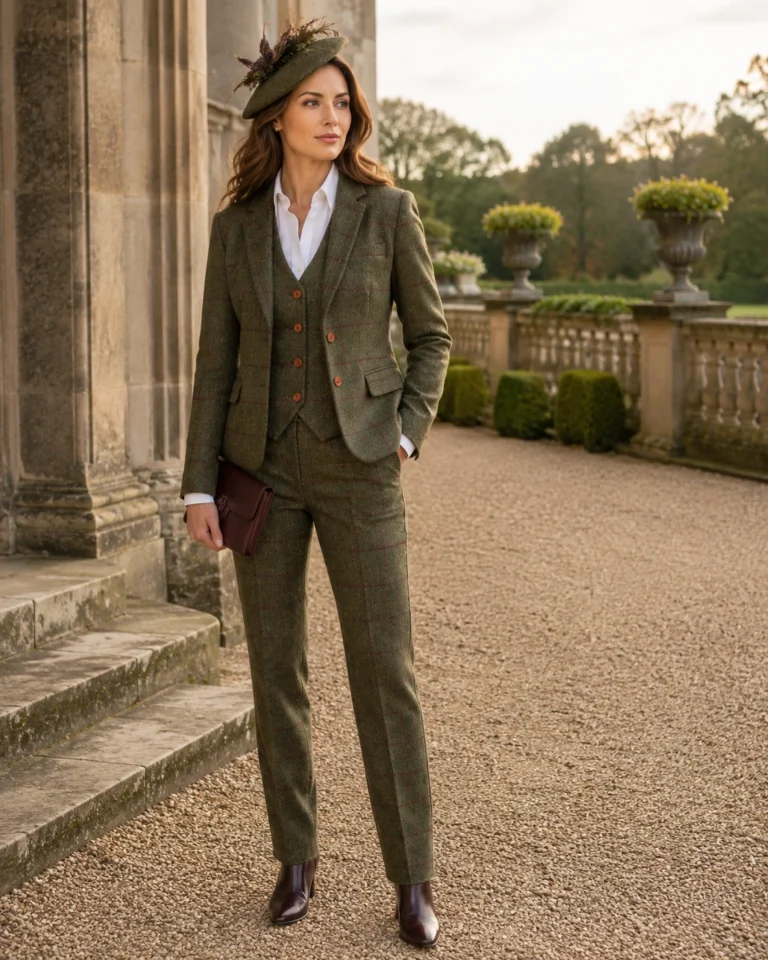
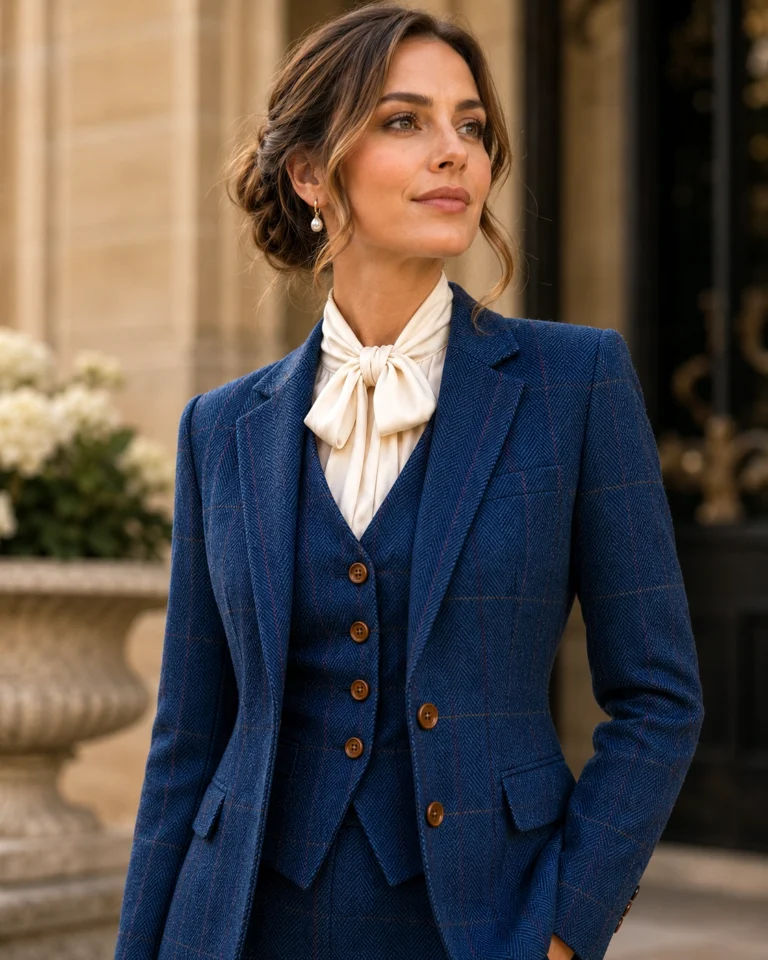
A trouser suit creates a continuous tailored line from shoulder to shoe. It can feel sharply contemporary in a close herringbone or more characterful in an overcheck, windowpane or country check.
Trousers are particularly practical when the wedding includes travel, outdoor photographs or a long reception. They allow confident movement and can be styled again after the event with knitwear, shirts, boots or individual tailoring pieces.
Choose the trouser shape with the jacket
The jacket and trousers should look as though they were designed in conversation. A closely shaped or shorter jacket often works well with a neat trouser line. A longer or more structured jacket can balance beautifully with a straighter or more relaxed leg.
Think about the rise as well as the width. The waistcoat should meet the trouser waistband cleanly, without exposing a band of shirt when you stand naturally. If your waist, hip and leg proportions rarely align with a standard size, Made to Measure tailoring offers closer control.
Decide on the shoes before the length
The intended footwear affects the finished trouser length. A trouser cut for a flat brogue or loafer will sit differently over a heeled shoe or ankle boot. Measure and assess the hem with the shoes you are most likely to wear on the day.
Women’s wedding skirt suits: tailored structure with a different movement
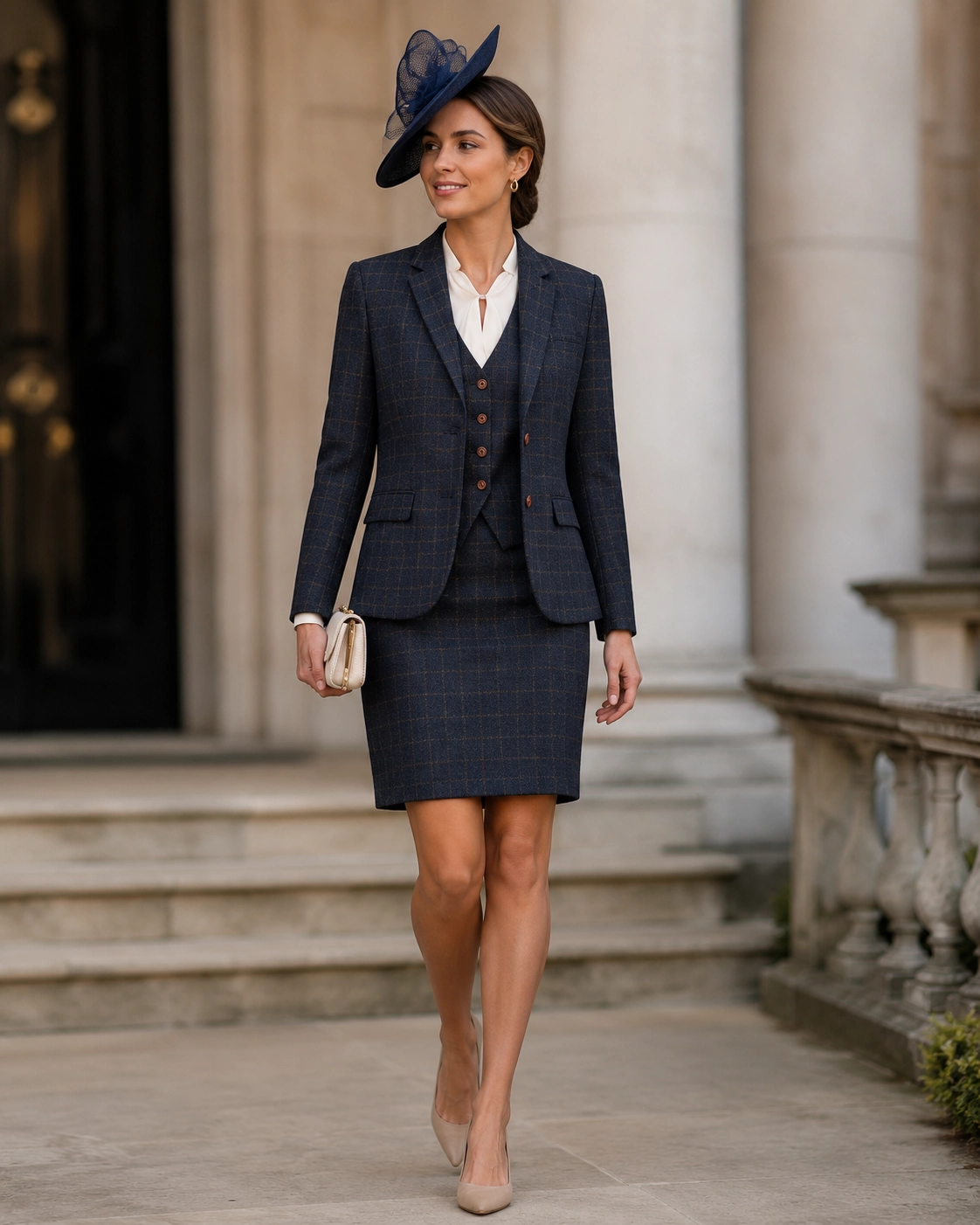
A coordinated skirt changes the movement of the suit while retaining its tailored authority. Paired with a matching jacket and waistcoat, it creates a true three-piece outfit rather than a jacket added to an unrelated skirt.
The most important details are waist placement, skirt length and the relationship between the hem and jacket. A shorter jacket can reveal more of the skirt and emphasise the waist. A longer jacket gives a more elongated, coat-like outline.
Consider the practical details of the day: stairs, seating, weather, footwear and how much movement the celebrations will involve. A skirt should remain comfortable while walking and sitting, not only while standing in front of a mirror.
What role does the waistcoat play?
The waistcoat gives both trouser and skirt suits their complete three-piece character. It defines the centre of the outfit, keeps the look polished when the jacket is removed and introduces another opportunity to refine proportion.
For women’s tailoring, a clean non-lapelled waistcoat sits smoothly beneath the jacket and avoids unnecessary bulk. It should follow the body without pulling across the bust or waist, and its lower edge should meet the waistband of the trousers or skirt.
If you would like a deeper look at all three pieces, read our guide to women’s three-piece suits.
Choose for your place in the wedding, not for a stereotype
For a bride
A wedding suit can be the central bridal outfit rather than an alternative to one. Pale neutrals can create a quiet ceremonial look, while green, navy, burgundy or a confident check makes a stronger and more individual statement. The fabric and cut should reflect how you want to appear, not an expectation that bridal tailoring must be restrained.
For a groomswoman or bridesmaid
The suit can match the principal wedding outfit exactly, use the same cloth in a different configuration, or repeat only one colour from the wider palette. A coordinated approach usually photographs more naturally than making every member of the party identical.
For a wedding guest
A tweed suit provides enough character for the occasion without relying on disposable occasionwear. Choose a cloth that complements the season and venue, then use accessories to make it feel celebratory rather than corporate.
How to choose a wedding-suit colour
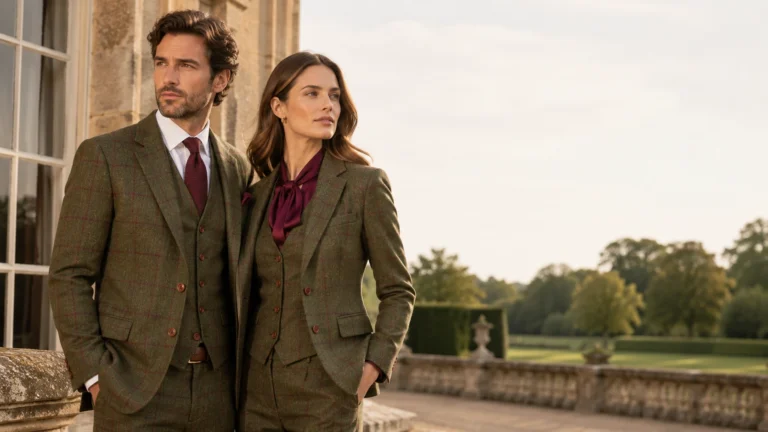
Begin with the actual cloth, not a generic colour label. Green tweed may include red, gold, navy or brown overchecks. Brown cloth may contain blue or maroon lines. Those quieter colours can connect the suit to flowers, invitations, ties, shoes and other members of the wedding party.
- Green tweed: works naturally with ivory, cream, rust, burgundy, blush, gold, brown and selected blues.
- Brown tweed: pairs well with cream, navy, pale blue, forest green, burnt orange and wine tones.
- Navy tweed: can be softened with ivory and pale blue or enlivened with rust, burgundy, gold and tan.
- Grey or charcoal tweed: offers a quieter base for jewel tones, soft pinks, blues and rich greenery.
These are starting points, not rules. Lighting, pattern and the secondary threads in the fabric matter. Our Tweed Fabric Guide explains the different fabric families, and a physical sample is the safest way to coordinate the wider palette.
Made to Order or Made to Measure for a wedding?
Made to Order normally begins with a listed size and lets you choose the fit, length and garment configuration offered on the product. It is suitable when standard sizing generally works and you want to personalise the finished look.
Made to Measure begins with individual measurements and gives closer control over the jacket, sleeve, trouser or skirt proportions. It is valuable when standard sizing is consistently awkward or when you want the suit developed more closely around your body.
If an adult size is not listed, contact us before ordering. A confirmed extended-size Made to Order accommodation may be possible at the equivalent Made to Order price, subject to tailoring suitability.
Order early enough to enjoy the process
Most Made to Order and Made to Measure suits are estimated at approximately four to six weeks including delivery once all required information is complete. For a fixed wedding date, we recommend allowing at least eight weeks wherever possible. This gives sensible time for measurement checks and any issue that may need resolving.
Our delivery and lead-time guide explains when the production estimate begins and how to plan around an important event.
See the tweed before choosing the final outfit
Fabric colour and texture can shift across screens and lighting. Free samples are available to suit and garment customers, subject to current cloth availability. Compare the sample with the intended shirt, shoes, flowers and other wedding colours before committing to the final combination.
Your wedding suit should look like you chose it, not like you settled for it. Explore our women’s tweed tailoring, browse the wider wedding suit collection, or contact us for guidance on cloth, fit and coordination.