Women’s Three-Piece Suits: How to Choose the Jacket, Waistcoat and Trousers
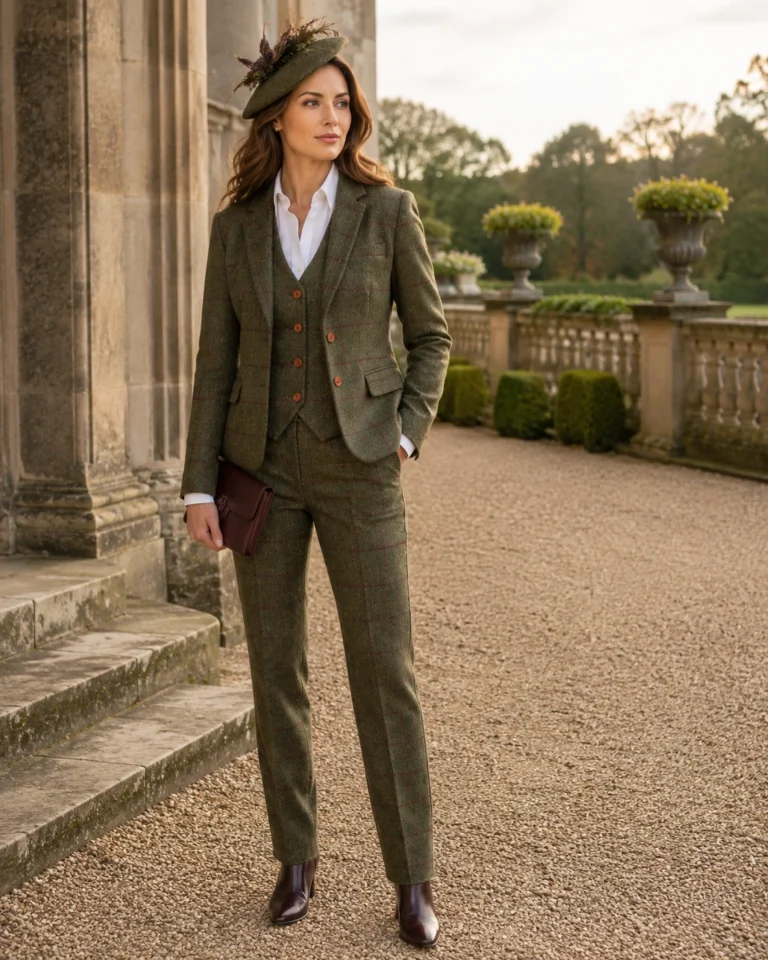
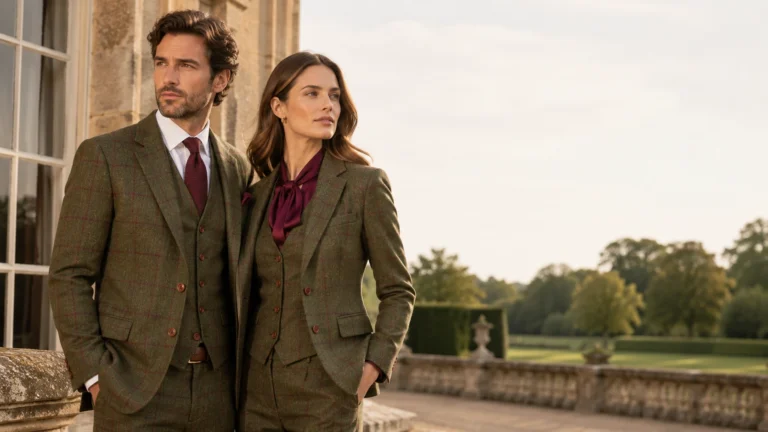
A well-cut women’s three-piece suit has a particular kind of confidence. The jacket establishes the silhouette, the waistcoat brings definition and the trousers complete a continuous tailored line. Each piece should work beautifully together, but none of them should feel like a smaller version of menswear.
At That British Tweed Company, women’s tailoring is developed around women’s proportions, with trouser and skirt options available on selected designs. This guide explains how to choose the combination that feels right for your body, your occasion and your personal style.
What makes a women’s three-piece suit work?
The success of a three-piece suit is not simply that all three garments use the same cloth. The proportions need to relate to one another. The jacket should frame the waistcoat rather than conceal it completely, the waistcoat should sit cleanly without pulling, and the trousers should continue the line of the jacket.
Tweed adds another consideration: pattern scale. A quiet herringbone gives the silhouette a restrained, versatile finish. An overcheck, windowpane or country check makes the suit more expressive and allows individual colours in the cloth to be repeated through shirts, footwear and accessories. You can compare the current cloth families in our Tweed Fabric Guide.
Choosing the jacket
Single-breasted or double-breasted?
A single-breasted jacket creates a clean, adaptable line and leaves more of the waistcoat visible. It is an easy choice for weddings, work, race days and occasions where you may want to wear the jacket separately later.
A double-breasted jacket has greater visual presence. The overlapping front places more emphasis on the waist and creates a deliberately structured silhouette. It can look especially striking in a confident check, although the stronger front means the waistcoat is naturally less visible while the jacket is fastened.
Think about length and proportion
Jacket length changes the balance of the entire outfit. A shorter jacket can make the legs appear longer and gives the suit a sharper, contemporary character. A longer jacket provides more coverage through the hip and can create a calmer, elongated outline.
Neither is universally more flattering. The right choice depends on your height, torso-to-leg proportion, preferred footwear and how you want the suit to feel. If standard proportions are usually difficult for you, Made to Measure gives closer control over jacket, sleeve and trouser or skirt proportions.
Choosing the waistcoat
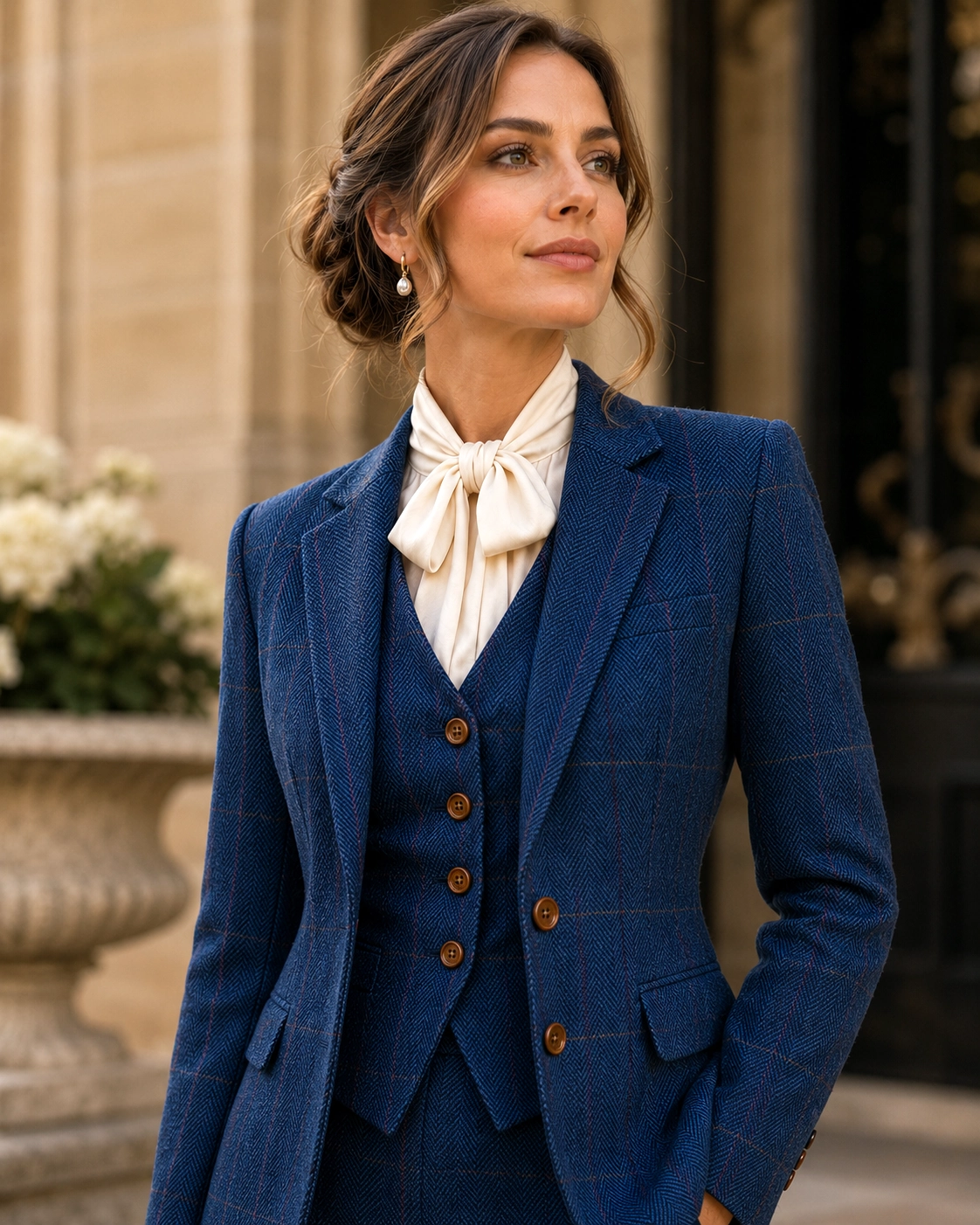
The waistcoat is what turns tailored separates into a complete three-piece look. In women’s tailoring, a clean non-lapelled waistcoat keeps the front refined and avoids unnecessary bulk beneath the jacket.
Fit is particularly important here. The waistcoat should follow the body without straining across the bust or waist. Its hem should meet the waistband of the trousers or skirt so that a strip of shirt does not appear between the two when standing naturally.
A matching waistcoat produces the strongest head-to-toe statement. It also gives you a polished outfit when the jacket comes off later in the day. For a wedding or long event, that practicality matters as much as the photographs.
Choosing the trousers
Slim, straight or more relaxed?
The trouser shape should balance the jacket rather than compete with it. A neater leg works well with a closely shaped jacket, while a straighter or more relaxed line can balance a longer or more structured jacket.
Consider how you will actually move during the occasion. Sitting, travelling, dancing and spending a full day in the suit require comfort through the waist, hip, rise and thigh. The best trousers look precise without feeling restrictive.
Length and footwear
Decide on the shoes before finalising trouser length. A trouser intended for a flat brogue or loafer may sit differently over a heeled shoe or ankle boot. Bring the intended footwear into the measuring process wherever possible, particularly when ordering for a wedding.
Could a skirt replace the trousers?
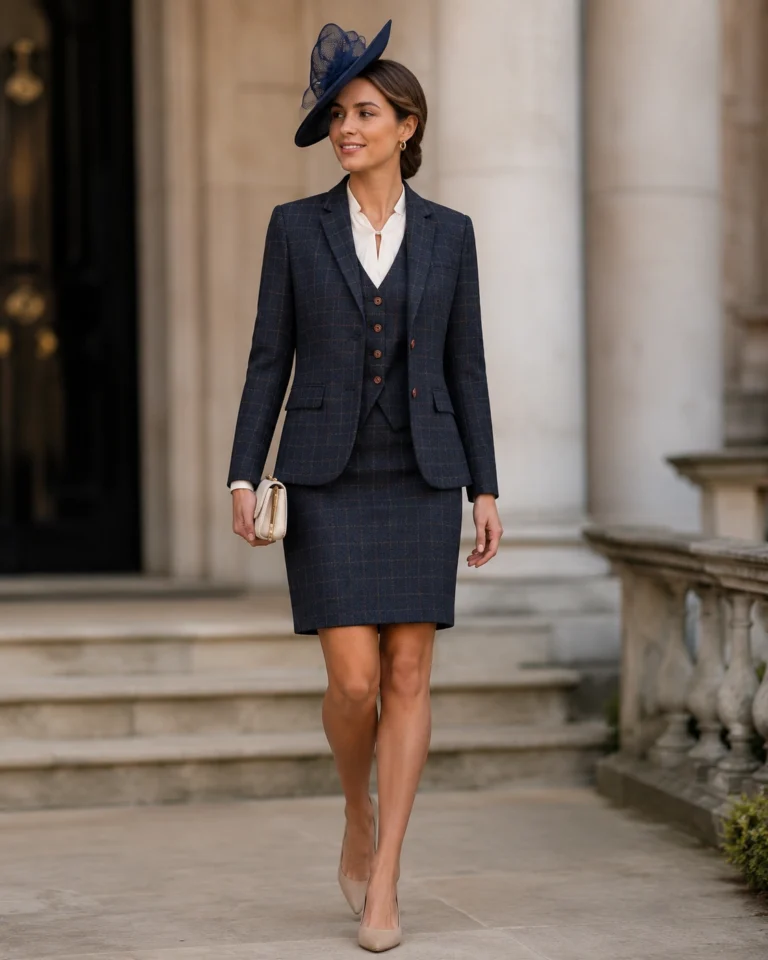
Yes. Selected women’s suits can be ordered with a coordinated skirt, creating a three-piece combination of jacket, waistcoat and skirt. A skirt suit feels no less tailored; it simply changes the movement and visual balance of the outfit.
If you are deciding between the two, think beyond convention. Choose trousers if you prefer their movement, styling flexibility or stronger continuous line. Choose a skirt if it better reflects your style or works more naturally with the shoes and proportions you want. Our guide to tweed wedding suits shows how both can form part of a coordinated wedding wardrobe.
Made to Order or Made to Measure?
Made to Order normally begins with a listed size, followed by the fit, length and styling choices offered on the individual product. It is a strong option when standard sizing generally works for you but you want a suit made in your chosen cloth and configuration.
Made to Measure begins with individual body measurements and offers wider control over proportion and selected styling details. It is particularly useful when your jacket and trouser sizes differ significantly, when standard sleeve or body lengths rarely work, or when you want the silhouette developed more closely around your proportions.
If your adult size is not shown, contact us before assuming that full Made to Measure is required. Subject to tailoring suitability and confirmation, an extended-size Made to Order accommodation may be possible at the equivalent Made to Order price.
How should a women’s three-piece suit fit?
- Shoulders: the jacket shoulder should end close to your natural shoulder without collapsing or projecting.
- Bust and front: the jacket and waistcoat should close cleanly without pulling or gaping.
- Waistcoat: it should sit close enough to look tailored while still allowing a full, comfortable breath.
- Sleeves: the length should work with the shirt or top you plan to wear beneath the jacket.
- Trousers or skirt: the waistband should remain comfortable when both standing and sitting.
- Movement: you should be able to sit, walk and raise your arms naturally without the outfit feeling fragile or restrictive.
Use the Women’s Size Guide when choosing Made to Order, or follow the product-specific measurement instructions for Made to Measure.
Choose the cloth before the accessories
Tweed is rarely a completely flat colour. A green cloth may contain brown, blue, gold or red lines; a navy fabric may reveal lighter fibres or a contrasting overcheck in natural light. Those secondary colours can guide the shirt, shoes, tie, jewellery or wedding palette.
A screen cannot show every shift in colour and texture. We therefore offer free fabric samples to suit and garment customers, subject to current availability. Request the exact cloth before buying if you are coordinating a wedding, matching accessories or choosing between similar shades.
Your suit should feel considered from every angle. Explore our women’s tweed tailoring, browse the complete three-piece tweed suit collection, or contact us for guidance on fabric, sizing and the right tailoring route.