How to Coordinate Tweed Wedding Suits for the Whole Wedding Party
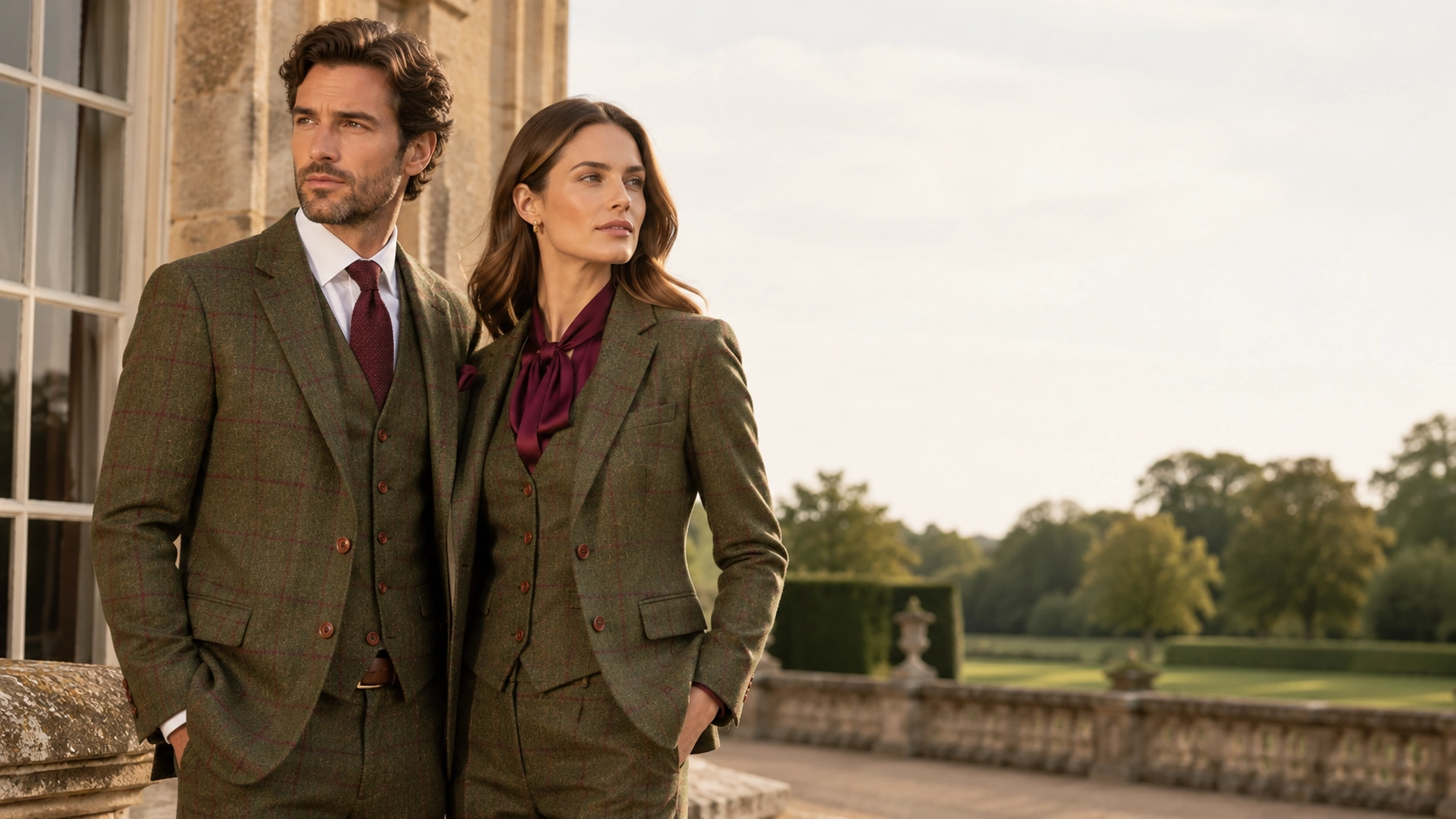
To coordinate tweed wedding suits successfully, the wedding party does not need to dress identically. The most polished groups share a deliberate visual language — a cloth, colour, check or accessory — while allowing each person’s role, proportions and personal style to remain visible.
Tweed is especially useful for this because a single fabric can contain several colours. The base shade may establish the main look, while an overcheck connects shirts, ties, flowers, dresses and décor throughout the day.
Begin with one anchor for the wedding party
Before choosing every garment, decide what will hold the group together. That anchor might be:
- the same tweed cloth across several suits;
- one shared base colour, such as green, brown or navy;
- an overcheck colour repeated through accessories;
- matching waistcoats with different jackets or trousers;
- the same fabric family in related but non-identical colours.
One clear connection is enough. Trying to make the suits, flowers, dresses, stationery and venue décor match exactly can make the result feel forced. Coordination is about relationship, not duplication.
Should the groom and groomsmen wear the same suit?
They can, but they do not have to. Matching suits create a formal, unified line and work particularly well when the group varies accessories or waistcoat styling. A more individual approach lets the groom take visual priority while the groomsmen remain unmistakably connected.
Option one: the same cloth, different details
Dress the groom and groomsmen in the same tweed, then distinguish the groom through a different tie, waistcoat configuration, pocket square or buttonhole. This is the simplest route when you want consistency in photographs.
Option two: a statement groom and quieter party
Use a confident check for the groom and a related herringbone or tonal cloth for the groomsmen. Repeat one colour from the groom’s check in the party’s accessories. This creates a hierarchy without making the group look disconnected.
Option three: matching waistcoats
A shared tweed waistcoat can unite otherwise different suits. This works particularly well when members of the party already own suitable navy, brown or neutral tailoring and you do not want every person to purchase a complete matching outfit.
Explore the available tweed waistcoats and complete men’s tweed suits before deciding how much of the look should be shared.
How to include women in a coordinated suit party
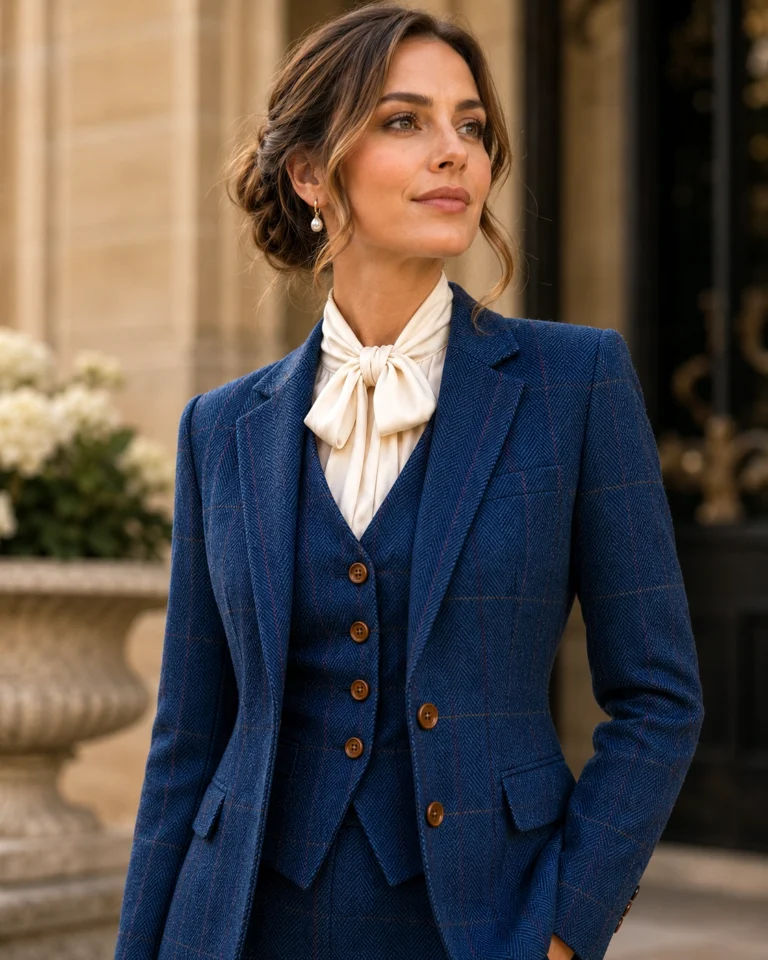
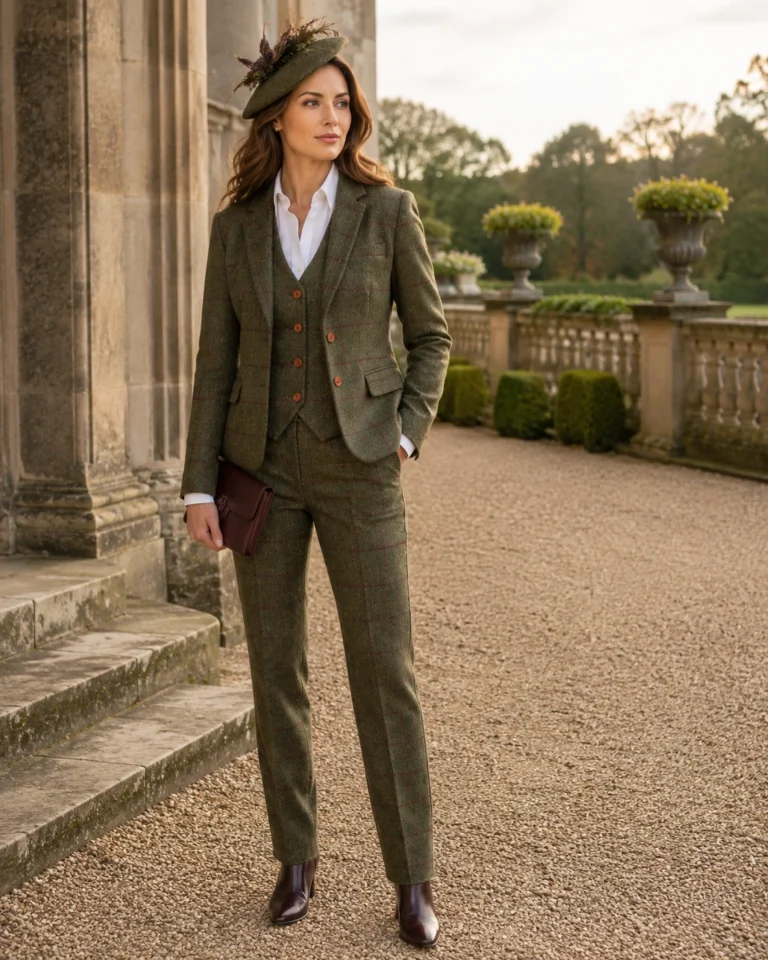
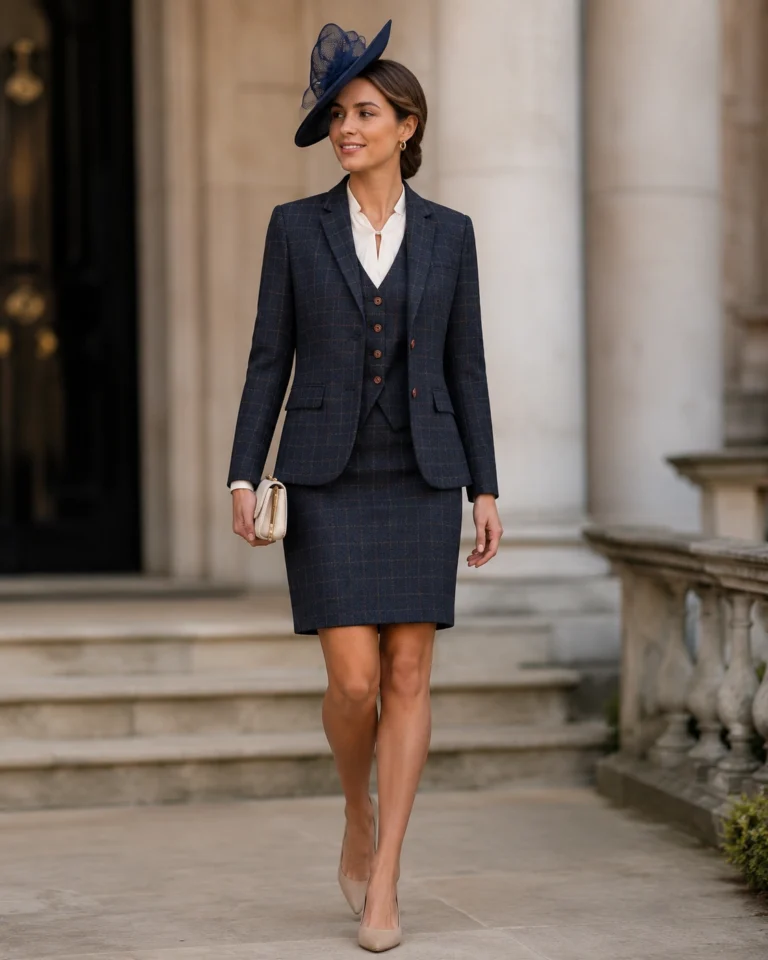
Women in the wedding party should not be treated as an afterthought or asked to fit into a men’s cut. Women’s jackets, waistcoats, trousers and skirts use range-appropriate proportions while still allowing the same cloth to connect the entire group.
A bride, groomswoman or bridesmaid might wear:
- the same cloth as the groom in a women’s trouser-suit configuration;
- a coordinated skirt suit in the same fabric;
- a matching waistcoat with a different jacket or lower garment;
- a related colour or quieter pattern from the same fabric family;
- Made to Measure tailoring developed around individual measurements.
Where a matching cloth is available, the distinction can come from the silhouette rather than the colour. Read our guide to women’s wedding trouser and skirt suits when choosing the configuration.
How should a page boy coordinate with the adults?
A page boy can echo the adult party without looking like a miniature adult. Boys’ suits use child-specific proportions and standard boys’ sizing, with the options shown on each product.
Where the same cloth is available, a matching three-piece suit creates a clear family connection. Alternatively, the page boy can wear a related cloth, a matching waistcoat or accessories that repeat the wedding’s main colour.
Comfort deserves special attention. Consider the time of year, ceremony length and how much of the day the child is expected to remain in the complete suit. A coordinated waistcoat can preserve the look after the jacket comes off.
Browse our boys’ tweed wedding suits for page boys and junior groomsmen.
Use the fabric to build the colour palette
Look closely at the tweed rather than relying on its product colour alone. An olive cloth with a red overcheck already suggests cream shirts, burgundy or rust accessories and warm brown footwear. A navy cloth with tan lines can connect naturally to pale blue, cream, camel and brown. A brown check containing blue gives the option of introducing navy without adding a foreign colour.
This approach makes the overall wedding feel layered and considered. It also avoids the impossible task of finding separate items in exactly the same digital colour.
If green is central to the wedding, our guide to colours that work with a green tweed suit covers shirts, shoes, bridesmaid colours and seasonal palettes in more detail.
Match the level of formality, not every garment
A coherent wedding party shares a similar level of formality. If the groom is wearing a complete three-piece suit, groomsmen in very casual separates may look accidental even if the colours match. Conversely, a relaxed outdoor wedding does not require every person to wear the fullest possible configuration all day.
Use these elements to keep the group balanced:
- similar shirt formality and collar style;
- consistent footwear tone or level of polish;
- related ties, bow ties or open-neck styling;
- buttonholes or pocket squares drawn from the same palette;
- a clear plan for jackets and waistcoats during formal photographs.
Made to Order and Made to Measure can work together
A wedding party does not have to use one sizing service. Some adults may fit the listed Made to Order sizes well, while another person benefits from Made to Measure proportions. Boys’ tailoring remains Made to Order using its own size range.
The shared cloth and styling decisions can keep the group coordinated even when the route to fit differs. If an adult Made to Order size is not shown, contact us before ordering; a confirmed extended-size accommodation may be possible at the equivalent Made to Order price.
How early should a wedding party order?
Most Made to Order and Made to Measure garments are estimated at approximately four to six weeks including delivery once every required measurement and styling detail is complete. Group orders involve more people, more measurements and more opportunities for delay, so beginning at least eight weeks before the wedding is sensible wherever possible.
Start with the people whose availability or sizing needs are most complicated. Collect information systematically and confirm the wedding date when asking for guidance. Our delivery and lead-time page explains the production window.
Request one set of fabric samples before final decisions
Photographs cannot reproduce every colour in a textured or checked cloth. Request samples of the shortlisted tweeds and compare them in daylight with shirts, accessories, flowers and any other important fabrics.
Free fabric samples are available to suit and garment customers, subject to current cloth availability. Include the exact fabric names or product links and the delivery address when contacting us.
Coordinate the wedding party without making everyone identical. Explore tweed wedding suits for men, women and boys, compare the full tweed tailoring collection, or contact us for help with fabrics, group sizing and the ordering sequence.